

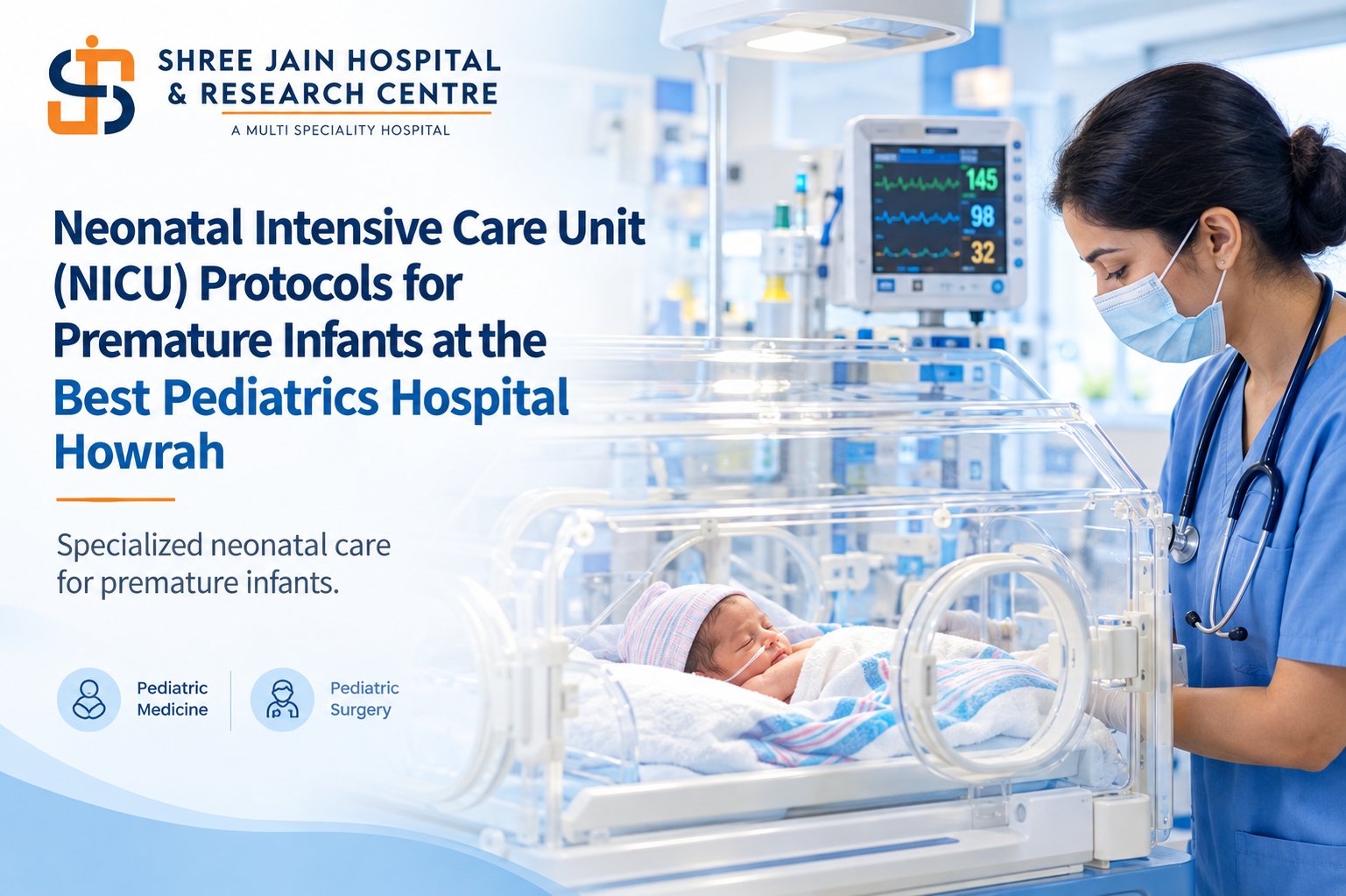
If a baby is born at 32 weeks, the weight can be approximately 1.6 kilograms. It is about the average weight of a large cooking oil bottle. When parents see the baby for the frist time, the question what every parent asks is about survival. How does something this small survive? The honest answer has nothing to do with reassurance. Its sequence — a set of ordinary, unglamorous steps, done in a fixed order, by people who don’t skip any of them even when the room is calm and nothing looks urgent yet.
We are saying this here as this condition and related questions comes almost every week when the parents been informed that their baby is coming early, before the given date. Not a comfort piece. What actually happens, step by step, inside NICU care at the Best Pediatrics Hospital Howrah provides.
“Premature” Covers a Lot of Ground
Premature birth beams when a baby is born before 37 weeks completion. But, it should be understood that a baby who is born at 36 weeks and a baby born at 26 weeks are not dealing with the same problem. A baby at 36 weeks just needs a few days of care and feeding and can be discharged after all vitals are normal. But the problem of a 27 weeks baby is quite complicated. The lungs still have not started making enough surfactant, the blood vessels in the brain are still forming (the bleeding risk occurs from here), and full feeding cannot be possible as the gut cannot handle that too without inflaming. So there’s no one “premature baby protocol.” There are several, and which one applies depends on gestational age and birth weight — not on the word “premature” by itself.
The First Hour Matters More Than People Assume
Neonatology borrowed the term “golden hour” from trauma medicine. For a premature baby, it’s the sixty minutes right after birth, and the numbers behind it are more specific than most people expect.
A quality-improvement audit at a NICU in central India found that only 7.7% of preterm babies under 34 weeks were getting the full set of recommended golden-hour steps — IV fluids on time, first medications given when they should be. Once the unit reorganised who did what during that hour, compliance jumped to 71.7%. Moderate hypothermia at admission dropped from nearly every baby to 12.1%. That’s not incremental. That’s almost every baby arriving cold, versus almost none.
Why the fuss over temperature? A premature baby has almost no body fat and a lot of skin relative to body weight, so heat disappears fast. A body spending energy to stay warm is a body pulling oxygen and glucose away from everything else it needs to be doing. Keeping that from happening — pre-warmed equipment, plastic wrap for the smallest babies, warmed respiratory support — isn’t a comfort step tacked onto the real medicine. It’s load-bearing.
Breathing Support Looks Different Than It Did Ten Years Ago
Respiratory distress is the single most common reason a premature baby ends up in the NICU. Fast breathing, flaring nostrils, the chest pulling in with each breath, a grunting sound as the baby tries to hold its own airways open.
Treatment has shifted. Ten years ago the default was earlier intubation and routine surfactant. The evidence now points somewhere else: start with CPAP — a mask or nasal prong setup that keeps gentle pressure on the airway — and only intubate babies who don’t stabilise on that. A 2025 review from a Level 2 newborn unit found 87.3% survival for late preterm babies and 84.4% for moderate preterm babies managed this way, with surfactant given selectively rather than by default.
There’s a reason to prefer this beyond the numbers. A tube down an airway that small carries real risk — irritation, infection, sometimes lasting lung damage. Skipping it when a baby can be stabilised without one isn’t caution for its own sake. It’s the better bet now, and the data backs that up.
What “Level II” or “Level III” Actually Means
Parents get told their baby needs a certain “level” of NICU and rarely get told what that means in practice.
| Level | Handles |
| Level I | Healthy, full-term babies needing routine observation |
| Level II | Moderately preterm babies — phototherapy, feeding help, short-term breathing support |
| Level III | Babies needing ventilator support or care for serious complications |
| Level IV | Extremely premature infants, or babies needing surgery |
Most babies born after 32 weeks who are otherwise stable belong in Level II or III. That’s most NICU admissions around Howrah, full stop. Level IV is real but rarer than people assume when they first hear the word “NICU.”
Feeding a Gut That Isn’t Finished Growing
A premature baby’s digestive tract can’t process milk the way a term baby’s can. So feeding starts small — deliberately small. Trophic feeding means a few millilitres given purely to wake up the gut, not to feed the baby in any meaningful sense. Volume goes up gradually, and only as fast as the baby actually tolerates it.
Breast milk is the priority, and here’s a specific reason why: a meta-analysis of randomised trials found breast milk cuts the relative risk of necrotising enterocolitis — a serious gut inflammation that hits preterm infants hardest — by close to 40% compared with formula. When a mother’s supply isn’t enough early on, pasteurised donor milk or fortified formula fills the gap, under supervision. Nobody’s guessing at the bedside here.
Kangaroo Mother Care Isn’t a Nice-to-Have
Out of everything in this list, this is the one families — and sometimes hospitals — underrate most. Kangaroo Mother Care is prolonged skin-to-skin contact between a stable baby and a parent. A Cochrane review found it cuts mortality by around 40% once started after a baby is stable. No machine involved. No medication. Just contact, done properly and often enough.
The evidence has moved even further since that review. In 2022 the WHO updated its guidance to recommend immediate skin-to-skin contact for preterm and low-birth-weight babies right after birth — not after a stint in an incubator, which is what older guidance called for. India had its own national guidelines on this since 2014, from the Ministry of Health and Family Welfare. Uptake across hospitals has been patchy, and research on Indian NICUs keeps noting the same gap: KMC gets recommended a lot more than it gets practised consistently.
At the Best Pediatrics Hospital Howrah families choose for this kind of care, KMC happens on daily rounds, not as something offered once discharge is already close. Mothers are brought into it as soon as vitals allow, because the payoff isn’t just survival odds — it’s steadier heart rate and breathing, better weight gain, and an easier road into breastfeeding.
Infection Control Is Boring Until It Isn’t
A premature baby’s immune system hasn’t had time to mature, which makes infection one of the quieter, more dangerous threats in a NICU. The rules look tedious on paper: hand hygiene before touching any baby, limits on how many people crowd one incubator, sterilised equipment every single time, close watching for early sepsis — a baby who suddenly can’t hold temperature, feeds badly, or seems oddly flat.
Research on family-centred NICU care in India found something worth saying plainly: strict infection rules and having parents present aren’t actually opposed to each other. Units that trained parents properly on handwashing and entry procedures kept high compliance while still keeping the baby with family instead of behind glass. The idea that infection control requires separating a baby from their parents doesn’t hold up once you look at units that do both well.
Monitoring Is About the Trend, Not the Number
Every baby in the NICU sits on continuous monitoring — heart rate, breathing, oxygen saturation. What matters is the pattern across hours, not any one reading, because a premature baby can look fine right up until they don’t. Blood work tracks jaundice, blood sugar, infection markers. The screening of eye for retinopathy, in case of prematurity, it is needed if it failed the cranial ultrasounds test for brain bleeding, is common when the baby arrives early, especially when it is before 32 weeks.
Discharge Is a Checklist, Not a Date on a Calendar
A baby doesn’t go home because a certain number of weeks passed. Readiness gets judged against specific things: holding temperature outside an incubator, feeding by breast or bottle without oxygen levels dropping, steady weight gain over several days running, no ongoing need for oxygen or IV support.
Before discharge, parents get walked through the practical stuff — safe sleep positioning, the exact warning signs that mean call the hospital, the follow-up schedule for vaccines and growth checks. This step gets rushed more often than it should. Studies using structured, teach-back-style discharge training — where parents repeat instructions back rather than just nod along — have shown real improvement in how confident mothers feel and in how often babies get readmitted afterward.
What This Actually Means If You’re Choosing Where to Go
If your baby is arriving early, or already in a NICU somewhere, none of this needs memorising. What’s worth knowing is that none of it is arbitrary — the order of the first hour, CPAP before intubation, feeding that starts almost absurdly slow, insisting on skin-to-skin contact even when a baby’s on oxygen, infection rules that feel like overkill until you know why they exist. Every one of these changes outcomes. Measurably. Not because it looks thorough in a hospital brochure.
What actually separates one hospital from another usually isn’t whether they know these protocols. Most do, at least on paper. It’s whether they’re followed the same way at 3 AM as they are at noon, and whether parents are told what’s happening instead of left outside a glass door guessing. That’s the standard worth asking about when you’re deciding where to admit your baby — and it’s the one the Best Pediatrics Hospital Howrah team holds itself to for every early arrival we see.
Frequently Asked Questions
At what gestational age does a baby usually need the NICU?
Most babies born before 34–35 weeks need at least some NICU observation. But birth weight, breathing effort at delivery, and any complications matter more than the week count alone.
How long does a NICU stay usually last?
Depends entirely on how early. A late preterm baby with mild breathing trouble might need days to a week. An extremely premature infant might need weeks to a few months — until they can hold temperature, feed properly, and breathe on their own.
Can Kangaroo Mother Care happen while a baby’s still on oxygen?
Usually, yes. It can often start on low-flow oxygen or CPAP once the baby’s otherwise stable. The team decides timing case by case, not by a fixed rule.
Are both parents allowed in the NICU?
Most units today, including ours, want parents present, not kept out. Bonding and involvement are part of the baby’s care, not a disruption to it.
What should I ask before discharge?
Know about the actual age , not the corrected one, what wil be the feding plan at home, the serious problem when you need to call as emergency, and the schedule of follow ups, visit, vaccination and hearing and eye testing.