

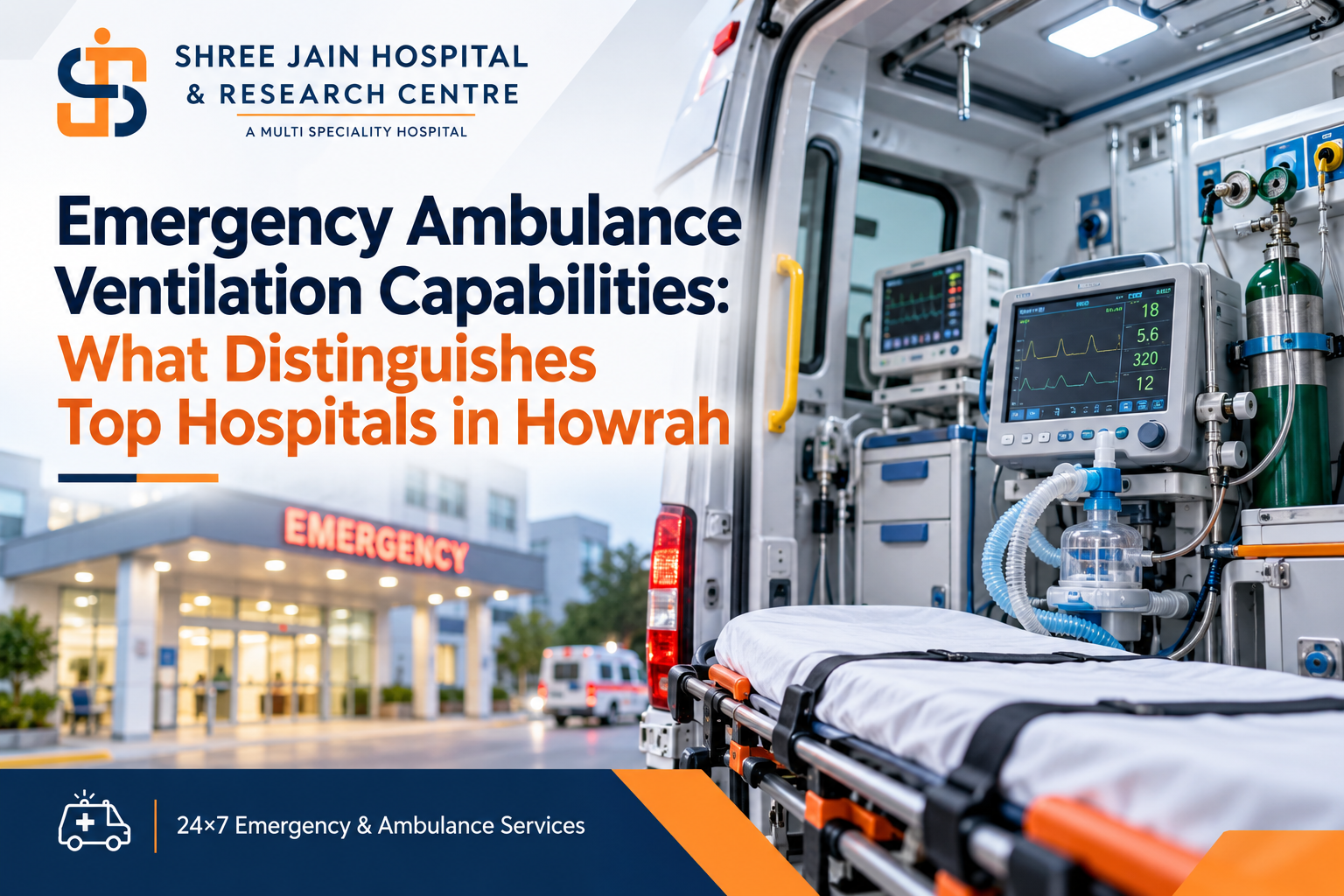
A paramedic is leaning over a patient in a moving ambulance. The patient coughs. Not a polite little cough—the kind that comes in waves, forceful, unstoppable. Within seconds, aerosolised particles fill the patient compartment. That space is roughly 2.5 metres long and 1.5 metres wide. If you’ve ever stood inside one, you know how tight it feels.
Now the numbers. If the ambulance’s ventilation system moves air at 5 air changes per hour, the paramedic’s exposure to those particles drops by roughly a third. At 12 ACH, it drops by about 68%.
Sounds good, right?
Here’s the part nobody talks about. Even at 12 ACH, exposure is reduced—not eliminated. The ventilation system creates a recirculation pattern inside the cabin. Particles end up everywhere. Behind the patient. Beside the patient. Right where the paramedic is sitting.
That finding came out of NIOSH research in Morgantown, West Virginia. It didn’t shock EMS professionals. It confirmed something they already suspected: cranking up air change rates isn’t enough on its own. The way air moves inside that compartment is what decides whether a paramedic breathes infectious aerosols during a 15-minute run.
In Howrah, this isn’t some abstract engineering debate. Emergency crews here deal with industrial trauma along the G.T. Road. Cardiac arrests in packed neighbourhoods. Road accidents at 2 a.m. Ambulance ventilation is a clinical variable, whether hospitals treat it that way or not. And among the Top Hospitals in Howrah, the ones who get this are the ones investing in systems that go past baseline compliance.
The Three Numbers That Actually Matter
Forget the brochures. Three metrics decide whether the air inside an ambulance is clinically safe.
Air change rate: This is how many times the full volume of air in the patient compartment gets replaced every hour. The international minimum for negative-pressure ambulances—ISO/TS 17430:2025—sits at 20 ACH, measured three minutes after the system starts running. India’s National Ambulance Code (AIS-125) requires air conditioning in the patient compartment. It doesn’t mandate any specific ACH number for standard ambulances.
That gap is a problem. An ambulance can meet AIS-125, have a working AC, and still run at 5-6 ACH. Technically compliant. Practically, it leaves paramedics and patients breathing concentrated aerosols.
The NIOSH cough simulator study put real numbers to this. Going from 0 to 5 ACH cut mean aerosol concentration by 34%. Going from 0 to 12 ACH cut it by 68%. But the recirculation pattern still spread particles throughout the compartment. Aerosol concentrations behind the patient, beside the patient, at different worker positions—no significant difference. The paramedic can’t just shuffle to a “safer” corner.
Filtration efficiency: This is what happens to particles that don’t get exhausted right away. Webasto makes HEPA units specifically for ambulance sanitary compartments. Their HFT series uses H14-grade filters that catch 99.995% of particles down to 0.1 micrometres. SARS-CoV-2 included. These systems push out up to 10 cubic metres of filtered air per minute and align with WHO, CDC, and ECDC guidelines.
A 2025 NIOSH study tested portable HEPA units inside an ambulance patient module. During a five-minute simulated aerosol-generating procedure, peak aerosol concentration dropped 46-55% compared to no filtration. After aerosol generation stopped, the HEPA units brought concentrations below background levels faster than the baseline. Less peak exposure. Less total exposure over a 30-minute window.
Airflow topology: This one’s the least understood, and probably the most important. A 2026 study in *ScienceDirect* looked at five ventilation topologies in a negative-pressure ambulance running at a constant 74 ACH—way above the 20 ACH minimum. Guess what mattered more? Airflow *pattern*, not air change rate. Setups using personalised ventilation and near-source extraction created a unidirectional displacement flow that wiped out recirculation zones entirely. Conventional high-ACH configurations still left pockets of stagnant or recirculated air.
The study’s conclusion says it plainly: “spatial flow topology overrides volumetric air exchange rates.” An ambulance can hit 74 ACH and still have a dead zone right next to the paramedic’s head. Or it can run at 20 ACH with smart directionality and do a better job. The number alone tells you almost nothing.
What “Advanced” Actually Looks Like
Put those three metrics together and you start to see the difference between a genuinely advanced ventilation system and a basic one.
It’s not about any single spec. It’s how filtration, airflow design, and pressure management work as one system. Clinical infrastructure, essentially.
Negative pressure is one piece. A negative-pressure ambulance keeps internal pressure lower than outside. Air only flows in. Anything leaving the compartment goes through filtration first. A Chinese study published in *ScienceDirect* found these ambulances had a positive influence on COVID-19 containment. Each unit carried three things: a negative pressure generator, ventilation equipment, and an isolation stretcher. Newly confirmed cases dropped sharply after deployment.
But this isn’t just pandemic-era thinking. A negative-pressure ambulance protects against any airborne pathogen a patient might be carrying. TB. Influenza. Measles. The list goes on.
Separate HVAC systems for driver and patient compartments are another marker. A NIOSH study noted that in a well-designed ambulance, those two zones shouldn’t share an HVAC system. Air movement between them should be minimal. The study measured an average of 6 ACH in a sealed research ambulance—described by researchers as “high for a sealed vehicle.” And that leakage happened with every port and crack sealed. Now imagine an older ambulance with degraded seals. The real air exchange between driver and patient areas can be much higher. That kills any negative-pressure or filtration strategy you’ve got.
HEPA capacity also has to match cabin volume and patient load. Webasto’s systems offer 200, 300, or 600 cubic metres per hour of fresh air, depending on ambulance size and occupancy. An undersized unit running flat out won’t match a correctly sized unit operating at moderate capacity. The 2025 NIOSH study used two portable HEPA units in a research ambulance over 15 years old. The researchers pointed out that in a newer, better-sealed vehicle, HEPA filtration would likely perform even better. Age and maintenance of the ambulance itself affect ventilation performance directly.
Why This Isn’t Academic in Howrah
Howrah’s emergency landscape has its own pressures.
The G.T. Road corridor from Shibpur through Bally carries heavy commercial traffic. Accidents happen often. Industrial units along the Howrah-Amta and Howrah-Bally belts produce chemical exposure incidents and trauma cases. Around Howrah Station and the wholesale market areas, population density is extreme. Cardiac and respiratory emergencies come in regularly—sometimes in patients with undiagnosed infectious conditions.
Every one of those scenarios asks something different from ambulance ventilation.
A trauma patient with a chest injury might need positive pressure ventilation during transport. That increases aerosol generation. A cardiac patient in acute distress could be coughing and sweating, shedding infectious particles. A patient with an undiagnosed respiratory infection—common during winter and monsoon—can contaminate the compartment in minutes.
AIS-125 says ambulance air conditioning installations “shall not encourage exhaust gases entering the patient’s compartment.” Doors need compression seals to block exhaust fumes, dust, water, and air. Good requirements. But they only address one side of the equation—keeping outside contaminants out. They say nothing about infectious aerosols generated inside the cabin, or about filtering recirculated air.
A hospital leaning solely on AIS-125 compliance might have an ambulance that keeps out diesel fumes but does nothing about a coughing patient.
If you’re comparing Top Hospitals in Howrah, that’s where the questions should start. Not how many ambulances. What’s inside them.
Shree Jain Hospital and Research Centre: When the Ambulance Is Part of the ER
Shree Jain Hospital and Research Centre runs a 130-bed multi-speciality facility on G.T. Road (South) in Shibpur. The Government of West Bengal classifies it as a Class-1 Multi-speciality Hospital. Emergency services operate 24×7, with rapid response teams, trauma care, and ambulance services. One number—03326415831—covers the hospital, the ambulance service, and the emergency department. For families in crisis, that simplicity matters.
The hospital’s approach to emergency transport says something about how they view the ambulance itself. Not a taxi with a stretcher. A mobile clinical environment. The patient compartment carries piped medical oxygen systems and transport ventilators that deliver controlled ventilation from cylinder oxygen and battery power. That’s the same level of equipment you’d find in the emergency department’s resuscitation bay. The ambulance service runs around the clock—not as a standby operation, but as an active extension of the ER’s clinical capacity.
For a hospital serving the Shibpur-Bally industrial corridor and the Howrah Station catchment, this matters. High volume of emergency cases. Patients whose condition during transport can decide the outcome on arrival. A road accident victim with an airway injury needs ventilation support in the ambulance, not just at the hospital door. A cardiac patient with arrhythmia needs continuous monitoring on the move. Clinical infrastructure in the ambulance has to actually work. Not just exist on paper.
Frequently Asked Questions
Families choosing a hospital for emergencies—or healthcare professionals vetting referral partners—can learn a lot by asking about ventilation. Not because every administrator will have the answers. But the ones who do tend to have thought about this seriously.
Ask about air change rates: The international minimum for negative-pressure ambulances is 20 ACH. If a hospital can state its ACH figures and explain how they’re maintained during transport, that’s a good sign. If nobody knows, that tells you something too.
Ask about filtration type: HEPA H14 filters remove 99.995% of particles down to 0.1 micrometres. Portable HEPA units in ambulances have been shown to cut peak aerosol concentrations by nearly half during simulated patient coughing. A hospital using HEPA filtration has invested in protecting patients and paramedics both.
Ask about negative pressure capability: Not every transport needs it. But a hospital serving a population with high rates of TB, influenza, or other airborne infectious diseases should have at least one negative-pressure-capable ambulance. Its presence signals the hospital has planned for high-consequence infectious disease transport.
Ask about maintenance: HEPA filters need replacement on schedule. HVAC systems need servicing. Negative-pressure generators need testing to confirm they hold the required pressure differential. A hospital that can describe its maintenance schedule is a hospital that maintains equipment—not just buys it.
If you’re vetting Top Hospitals in Howrah these questions give you something concrete. Verifiable answers. And they usually correlate with how a hospital handles other clinical investments.
The Gap Between the Standard and the Reality
India’s AIS-125 sets a floor. Not a ceiling. It requires air conditioning in the patient compartment, compression seals on doors, prevention of exhaust gas entry. It doesn’t require HEPA filtration. Doesn’t mandate a minimum ACH for standard ambulances. Doesn’t touch airflow topology.
An ambulance can fully comply with AIS-125 and still expose a paramedic to concentrated infectious aerosols on a routine run.
This gap isn’t unique to India. The NIOSH study found that even in a US research ambulance, the ventilation system “reduced but did not eliminate worker exposure to infectious aerosol particles.” Recirculation spread particles throughout the compartment. The 2026 airflow topology study was blunter: “adhering solely to the 20 air changes per hour minimum is clinically hazardous.” Their recommendation—an optimised 37 ACH configuration with unidirectional displacement flow.
Meeting the standard is the starting point. Not the finish line. Hospitals that go beyond AIS-125—HEPA filtration, directional airflow design, negative-pressure capability for high-risk transports—are choosing clinical outcomes over minimum compliance. That’s a deliberate choice. And it’s one patients and families can actually verify.
A Different Lens on Emergency Preparedness
Most hospital emergency preparedness discussions focus on visible infrastructure. ICU bed count. CT scanner availability. Specialist rosters. All of that matters.
But emergency care starts before the patient reaches the hospital door. It starts in the ambulance. In that confined space where the first critical interventions happen. Where a paramedic manages an airway while the vehicle weaves through traffic. Where the air itself can carry risk.
A hospital investing in advanced ambulance ventilation is making a statement about where emergency care begins. Patient safety isn’t confined to the building. Paramedics deserve protection too. Infection control is a continuum—and it extends into the vehicle.
Shree Jain Hospital and Research Centre has built its emergency services on this understanding. From the 24×7 emergency department to its equipped ambulance fleet, every stage of the patient journey gets treated as clinically significant. For people in Howrah—Shibpur to Bally, Howrah Station to the industrial estates—that means the air inside the ambulance is part of the treatment. Not a separate risk.
Final Thoughts
Ambulance ventilation won’t show up in hospital marketing materials. No visual drama like a new MRI machine. No emotional pull like a patient success story. But science doesn’t care about marketing. Air change rates, filtration efficiency, airflow topology—these determine whether a confined space protects its occupants or exposes them. Among the Top Hospitals in Howrah, the facilities investing in advanced ventilation systems understand emergency care as a continuum. It starts when the ambulance arrives. Not when the patient crosses the hospital threshold.
For families and healthcare professionals evaluating emergency services, asking about ambulance ventilation is a practical way to gauge a hospital’s commitment to patient and staff safety. The answers tell you more than specs. They tell you how a hospital thinks about care.
This article is for informational purposes only and does not constitute medical advice. For emergency medical assistance in Howrah, please call Shree Jain Hospital and Research Centre at 03326415831. Always consult qualified healthcare professionals for medical decisions.
References:
– NIOSH Study on Portable Air Cleaners Within an Ambulance Workspace. *Journal of Occupational and Environmental Hygiene*, 2025.
– Study on Negative Pressure Ambulances and COVID-19 Containment. *PMC/NIH*, 2020.
– Webasto HEPA Filtration Systems for Ambulances. *Webasto Group*.
– ISO/TS 17430:2025 — Negative Pressure Ambulance Patient Compartment Specifications.
– AIS-125: National Ambulance Code of India.