

Monsoon in Howrah. The sky opens up, the streets turn into shallow rivers, and within a week or two the fevers start. Not the kind that comes with a sneeze and goes after a hot cup of tea. These ones stay. A child’s temperature that won’t quit. A grandfather’s lab report that comes back with platelets at 70,000 and the word “dengue” scribbled at the top. And there will be a open forum flooded with opinions, bringing history of their own experience. The relative in another city who forwards a message about a magic juice. The local shopkeeper who stocks a herbal mix that he claims works overnight. By the time the family thinks about walking into a Renowned Hospital Howrah, their heads are already stuffed with half a dozen remedies and just as many fears.
What most of them don’t realise yet is that a lot of what they’ve been told belongs to that sticky collection of dengue platelet myths that never really goes away. They just keep getting passed around, season after season, as if they’re the truth.
The myths that keep getting airtime
There’s one that’s almost always first in line. The platelet transfusion myth.So, the calculation is simple, as soon as the count touches 40,000 to 50,000, or some number which is decided as cut-off, the patient needs to have the support of a platelet donor. People show up at the emergency desk almost demanding it. They’ve heard stories. They think topping up platelets from a bag is like putting petrol in a car. It’s not, but you can’t blame them for thinking that way when the messaging around them is so loud and so wrong.
Then there’s the kitchen remedy brigade. Papaya leaf juice is the big one. Goat milk comes a close second. Giloy juice, some weird green concoction, a powder from the ayurvedic shop. The promise is always the same: drink this and the platelets will shoot back up in a matter of hours. What nobody mentions is that a dengue patient’s stomach is already fragile. Throwing an untested, bitter, possibly contaminated liquid into it can make things worse. Some families delay coming to a hospital because they want to try these things first. That lost time can be expensive in ways no money can measure.
And there’s a quieter but just as damaging myth. The one that says a low platelet number equals severe dengue, automatically. It doesn’t seem to matter if the person is sitting up, talking, drinking water, passing urine, no bleeding anywhere. The number is low, so the mind goes straight to catastrophe. This belief fuels panic admissions and pushes relatives to demand transfusions that aren’t needed. At a Renowned Hospital, the staff see this play out so many times during the season that they could set a clock by it.
Why that platelet number isn’t the whole story
Dengue does strange things to blood. Inside the bone marrow, the virus attacks the platelet creation by slowing it down. And with that, the immune system also works like a competition and starts to clear ones which are floating around. So yes, the count dips. That’s real. The most done table discussion is how the dip is almost temporary. As soon as the fever passes the marrow resumes its work and the numbers start growing again. The body is aware of everything, it just needs the right time and conditions. A doctor who has watched hundreds of dengue cases inside a Renowned Hospital Howrah isn’t staring at that one number like it’s a verdict. They’re tracking the haematocrit, which tells them if the blood is getting too thick. They’re checking the pulse pressure and watching the urine output. They’re noting the skin colour, the breathing, whether the patient is restless or suddenly too quiet. The platelet count is one piece, not the whole puzzle. The World Health Organization guidelines, which any proper hospital follows are clear that platelet transfusion isn’t a standard fix.It halts back when the count is down below 10,000 or 20,000 even if someone is not bleeding, or the time the bleeding starts, that time, the count does not matter. You can have a look at the global position on the [World Health Organization fact sheet on dengue and severe dengue at ](https://www.who.int/news-room/fact-sheets/detail/dengue-and-severe-dengue ). Giving donor platelets to a stable patient doesn’t improve survival, and it opens the door to allergic reactions or lung issues that nobody wants to deal with on top of dengue.
The real danger in this illness is something less visible. It’s the plasma leaking out of tiny blood vessels. That leakage can collapse blood pressure, starve the organs, and send a patient into shock inside a few short hours. That’s the thing that keeps doctors up at night. Not just the platelet number sitting lonely on a lab slip.
What actually works, and it’s not fancy
Good dengue care is almost boring. Fluids. Rest. Watching. Clean water, properly mixed oral rehydration salts, coconut water if it’s clean, thin dal soups, even just plain boiled water. These are what keep the blood volume steady and push back against the slide toward shock. Fever and body pain are handled with paracetamol. That’s it. Drugs like ibuprofen or aspirin are kept far away because they can thin the blood and make bleeding more likely, and harder to stop if it starts.
Rest isn’t a nice-to-have. It’s part of the treatment plan. A soft diet that doesn’t churn the stomach, a room with dim lights, and the comfort of knowing that someone competent is checking in regularly, that’s the kind of care that carries a patient through. Inside a hospital the day follows a rhythm. Fluids in, urine out, blood counts repeated at the right times. A nurse notices if the patient seems more restless than before, or if the skin feels cooler than it did an hour ago. Small shifts get picked up early, before they turn into full-blown emergencies.
IV fluids are started only when a patient can’t drink enough by mouth or when warning signs start to flicker. And even then, the type of fluid, the rate it drips, and how long it runs are all worked out using protocols that have been tested over decades of dengue outbreaks across the world. There’s no fumbling around. No guesswork. And platelets? They get transfused only when there’s bleeding or a count so low the risk is undeniable. Not because a relative is panicking and pleading.
When waiting isn’t an option
Some signs don’t come with a pause button. Vomiting that won’t stop, where even a teaspoon of water comes right back. A belly so tender the patient can’t bear even light touch. Blood can come out from the nose or gums, it may be seen in stool or vomit. Hands and feet can suddenly feel cold and there may be a restlessness in the body that was not present before. These aren’t moments to scroll for home remedies or debate which juice to try next. They’re the body screaming that things are slipping into a dangerous gear, and a doctor needs to step in right away.
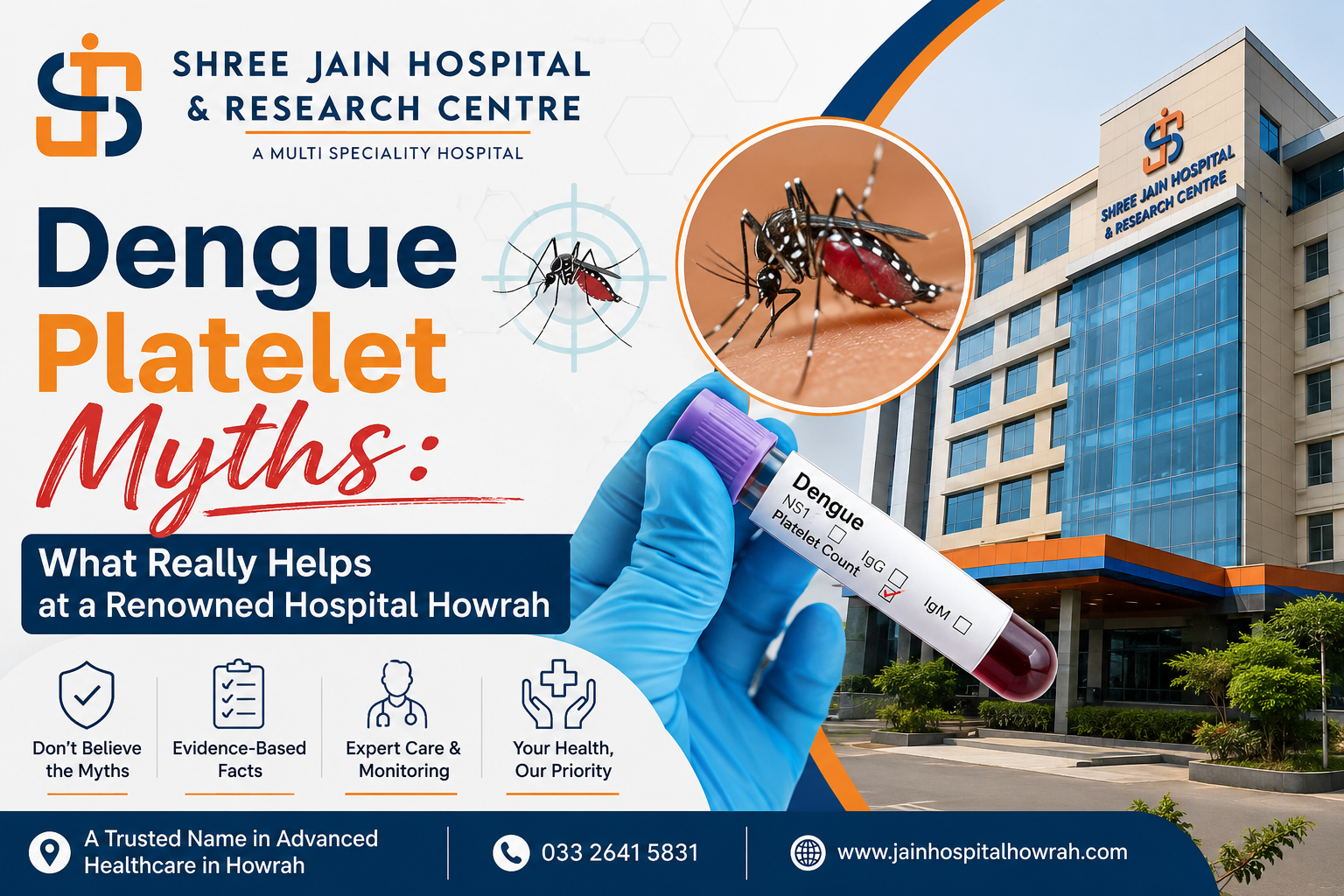
At Shree Jain Hospital and Research Centre, the emergency services don’t close. Dengue doesn’t care what time it is, so the hospital doesn’t either. The in-house lab can deliver a complete blood count, liver function checks, and the dengue-specific tests, NS1 antigen, IgM and IgG on the same day. That means decisions are made with fresh numbers, not yesterday’s.
A Renowned Hospital does more than treat a fever
A lot of what happens inside those walls isn’t written on a prescription. The doctors and nurses sit down with families who are scared and exhausted. They explain, gently and sometimes more than once, why a platelet count of 28,000 with zero bleeding might mean nothing more than watching and waiting. They walk through why that herbal drink someone swore by might irritate an already sensitive stomach. They explain that the simple packet of ORS, mixed in a glass of clean water, is often the most life-saving liquid in the entire building. These conversations take time and patience. But they drain the fear out of a room in a way that no quick reassurance from a forwarded message ever could.
Shree Jain Hospital and Research Centre runs a separate fever clinic during the dengue months. It’s designed so that anyone can walk in, get tested early, and get sensible advice without wading through the whole hospital complex. The ICU stays ready for the severe cases that do occasionally come through. Any transfusion that genuinely becomes necessary is done with screened blood components under safety checks that don’t bend. The hospital follows the National Vector Borne Disease Control Programme guidelines and updates its internal protocols whenever new evidence comes out.
The myths will be back next season
They always are. The dengue platelet myths feed on fear and repetition, and as soon as the rain starts falling again, the old stories will surface. The miracle juices. The magic numbers. The sure-thing transfusions. But a family that knows a platelet count isn’t a death sentence, that a glass of water holds more power than a pricey untested brew, and that a steady, experienced hospital team beats a frantic online search will move through the illness with less panic and much better odds.
For anyone in Howrah and the surrounding pockets, the clearest move is simple. See a doctor early. Let the clinical team guide what happens next. Shree Jain Hospital and Research Centre, a Renowned Hospital Howrah, offers exactly that calm, evidence-anchored care that gets patients through dengue’s unpredictable swings. Visit [jainhospitalhowrah.com ] for details about the fever clinic, visiting hours, and how to reach the hospital when the season hits. When it’s serious, answers that come from science and experience will always be safer than answers born from panic.